New Insights about a Professional Learning Network

My Professional Learning Network

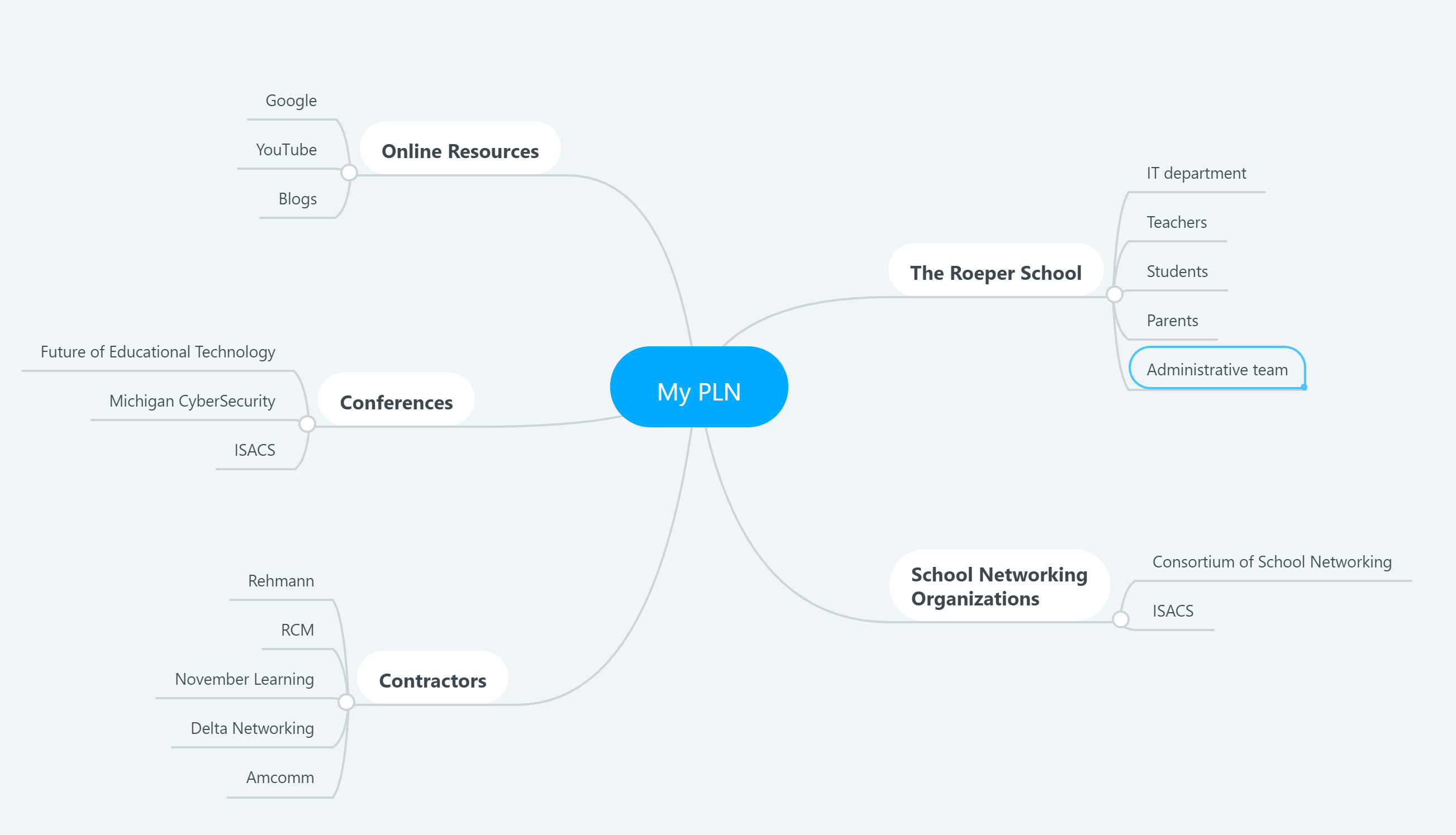
This week I examined my Professional Learning Network (PLN.) A PLN is the group of people and online resources that you can interact with to find answers to questions and discuss issues. I created this diagram to get a clear picture of what my PLN looks like, and I was surprised by what I found.

I am a very independent person, and I tend to prefer to find solutions for problems on my own. I like people, but most of the time I prefer to be in my own mind. When I began creating my PLN diagram, I thought it might only contain myself and some Google web searches. But I found that I use my PLN much more than I thought. I was surprised to all the people with which I connect. I interact with many different groups, and we work together well. When I looked at the diagram, I realized I had created my own PLN over the years without knowing it.

I have not consciously focused on building my network in the past. However, I naturally made these connections over time, and now I have an effective network. Now that I realize the value of my PLN, I am motivated to expand and strengthen it. Social media generally does not appeal to me, but now I’m curious to experiment with Twitter to see if I can build my network. I’m hoping a larger network will benefit the students in my school and that I can help other people in my network work on issues they are facing. I also agree with James Paul Gee (2018) when he says it is important to know how our students are interacting and learning online (para. 3). Participating in these spaces is the best way to become familiar with them.

References

Gee, J. P. (2018). Affinity spaces: How young people live and learn online and out of school. Retrieved from http://www.kappanonline.org/gee-affinity-spaces-young-people-live-learn-online-school/
Cooking With TPACK

When we set out to do a task we need to select the right tool for the job.  That’s obvious, but we may not always put this into practice. Unless schools are thoughtful about it, they may not choose the right tools when selecting technology to be used in the classroom.  Instead of selecting tools (iPads for example) because we “need technology”, handing them out to students and then charging teachers to come up with a way to use the devices in their classroom, the TPACK framework (Mishra and Koehler, 2006) says we need to consider whether or not an iPad will work well for teaching a specific topic effectively in the environment of that particular classroom and that school.

In this “Cooking With TPACK” assignment, we were asked to select various items from the kitchen. We then chose a random number which corresponded to a task that we needed to complete with the items selected. My selected task was to create a fruit salad using a bowl, a plate and salad tongs.

It’s no surprise that while salad tongs work well for serving a Caesar salad, they were not the ideal tool for slicing fruit. They worked fine for slicing a banana, but when it was time to cut a lime, a knife would have been better. This is analogous to a teacher using an iPad in the classroom because he or she was told to use it.  For some tasks, it may work great. For others, it may not. For example, the iPad can be an excellent tool for creating and sharing a video. However, the same tool might not be ideal for typing an essay. The right tool for the job lies in that “sweet spot” where technology, pedagogy, and content all meet.

References

Mishra, P., & Koehler, M.J. (2006). Technological pedagogical content knowledge: A framework for Teacher Knowledge. Teachers College Record Volume 108, Number 6, June 2006, pp. 1017–1054. Retrieved from https://d2l.msu.edu/content/DEVELOPMENT/2017/courses/DEV-candacem-2017-CEP810Master/Articles/mishra-koehler-tcr2006.pdf?&d2lSessionVal=XfUxWkrK71SZ0tVAIkbCOCjgz&ou=628350&&d2lSessionVal=rpAqJcgvsobatSrG0Jk0bp9ok&ou=663261

Learning Differences Between Novice and Expert Musicians

Photo by Daniel Wirtz on Unsplash

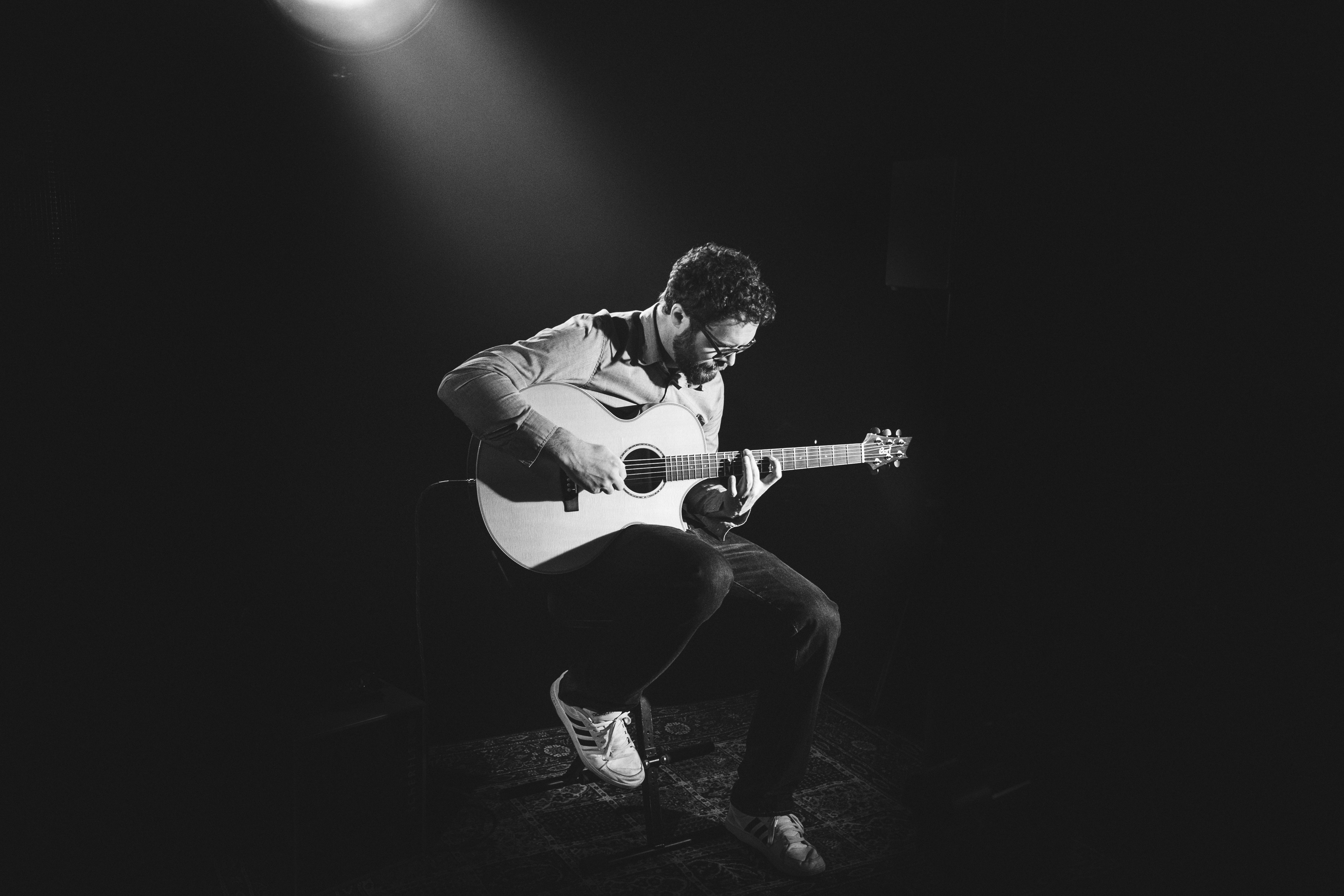
Have you ever struggled to learn an instrument or play a new song? Why is is it so much easier for an expert musician to learn how to play song well and what goes on in their head when they are learning it?

I began exploring this idea recently after I read Bransford, Brown & Cocking’s (2000) How People Learn. In my full essay, I discuss some of the techniques an expert musician may use while learning a new song. I talk about how the expert’s ability to recognize patterns such as scales can simplify the learning of the song and how the mind can be freed up to focus on other aspects of the piece such as conveying the intended emotion.

I talk about some of the concepts that experts use to “get out of their own way.” The musician can achieve a flow state such that the mind is not focusing on individual notes or the mechanics of how to play an instrument but instead he or she is freed to experience the music. By recognizing patterns, becoming fluent and “conditionalizing” knowledge the musician can learn and perform a song at a much higher level and with less effort than the novice (Bransford, et al. 2000, p.43).

Feel free to post your own comments, thoughts and experiences. I would love to hear your thoughts!

References

Bransford, J., Brown, A. L., & Cocking, R. R. (Eds.). (2000). How people learn: Brain, mind, experience and school (pp. 3-27). Washington, D.C.: National Academy Press.Retrieved from http://www.nap.edu/openbook.php?isbn=0309070368.

Design a site like this with WordPress.com
Get started